Publications

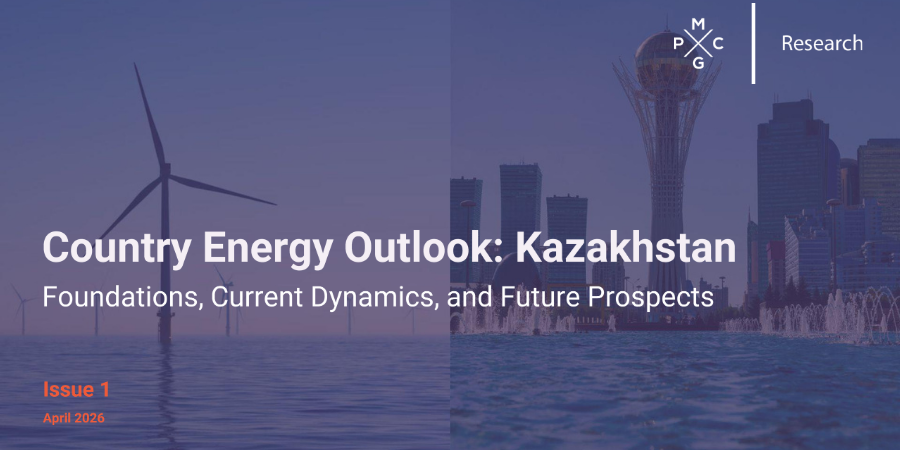
The Country Energy Outlook series provides a comprehensive analysis of energy sectors across key countries, examining their structure, performance, and transition pathways within the evolving global energy landscape. The series aims to deliver concise, data-driven insights into how different economies balance energy security, economic growth, and decarbonization. The first paper in this series focuses on Kazakhstan – Central Asia’s leading energy producer and a major global supplier of oil, gas, coal, and uranium. It explores the country’s energy sector from its historical foundations to its current dynamics and future transformation. While fossil fuels remain central to Kazakhstan’s economy, the report highlights ongoing efforts to diversify the energy mix through natural gas expansion, renewable energy development, and potential nuclear capacity, all within the context of its 2060 carbon neutrality goal. It also assesses the structural and geopolitical challenges that will influence the country’s transition trajectory. Main Findings Fossil fuel dominance creates both strength and risk: Coal accounts for around 70% of electricity generation, while oil and gas exports drive economic performance but expose Kazakhstan to global decarbonization pressures. Geopolitical and export dependencies are significant: Reliance on Russian transit routes remains a key vulnerability, prompting efforts to diversify export corridors toward Europe and Asia. Renewable energy expansion remains limited: Despite growth, renewables contributed only 5.9% of electricity generation in 2023, constrained by grid capacity and policy inconsistencies. Structural reforms are critical for transition: Addressing subsidies, regulatory uncertainty, and aging infrastructure is essential to attract investment and meet climate targets.
This annual report provides an analysis of economic trends, as well as denoting the challenges and opportunities (in local, regional, and global contexts) across selected value chains within six sectors to improve evidence-based decision-making through the provision of quality information and analytics. The specific sectors are tourism, creative industries, light manufacturing, shared intellectual services, waste management and recycling, along with cross-cutting sectors. The analysis tracks trends of 2021.
This paper explores the challenges and opportunities teleworking presents in the rural areas of Georgia and seeks answers on how to resolve the existing problems while taking advantage of the transitions the labor market is undergoing. It aims to analyze the institutional relationships, barriers, and opportunities to promoting change in the e-work market or workforce development system in the rural areas of Georgia. The paper also sets out to identify the potential policy interventions that could be taken to support this change.
This quarterly report provides an analysis of economic trends, as well as denoting the challenges and opportunities (in local, regional, and global contexts) in selected value chains within six sectors to improve evidence-based decision-making by providing quality information and analytics. The specific sectors covered are tourism; creative industries; light manufacturing; shared intellectual services; solid waste management and recycling; and cross-cutting sectors. The analysis tracks trends from the third quarter of 2021.
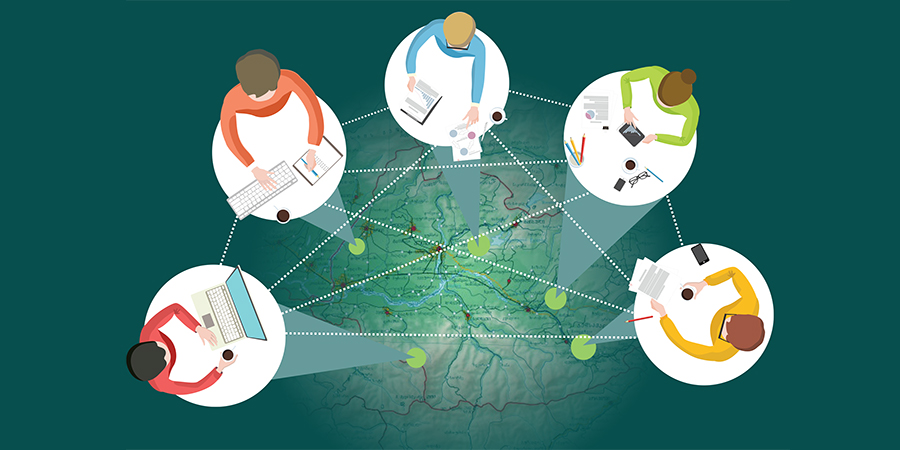
This publication includes the survey findings of the opportunities for teleworking, among employees of business companies. The survey was conducted through telephone interviews in January-May 2021 and predominantly covered large and medium sized companies in five self-governing cities: Tbilisi, Kutaisi, Batumi, Rustavi and Poti. The survey was prepared in the framework of the project “Supporting E-work Market Development in Rural Areas”, in assistance from the European Union (EU) and the United Nations Development Programme (UNDP) under the EU Neighbourhood Programme for Agriculture and Rural Development (ENPARD).
This policy research paper aims to draw the attention of stakeholders in Georgia’s energy sector to the issue of prices, their importance in energy security, and electricity supply security. The paper firstly reviews the existing academic and policy literature and afterwards analyses the current structure of the wholesale electricity market in Georgia to identify different prices and payment schemes. This analysis of the Georgian regulatory framework, along with current data and tendencies, allows us to identify some fundamental issues that are inherent in the structure of the ongoing wholesale electricity market in Georgia. As a result, this policy research paper highlights some challenges that need resolving in order to strengthen the security of supply in the electricity market.
This paper explores the alternative financial instruments that are or could become available to Georgian SMEs. Through the examination of various secondary sources and several interviews with relevant stakeholders, the paper identifies obstacles and opportunities in the path toward development of two asset-based instruments (leasing and factoring) and two equity-based instruments (crowdfunding and venture capital) that currently have limited availability and/or are being discussed by the regulatory authority of the country. The paper also looks into several innovative practices that are increasingly being implemented around the world to support the creation of alternative sources of finance, namely open banking, regulatory sandboxes, digital banks, and central bank digital currency (CBDC).Based on secondary sources, the paper also includes three case studies on Lithuania, Poland, and Israel. Meanwhile, the paper ultimately provides several recommendations to foster the development of the alternative instruments reviewed in the paper in Georgia.
This quarterly report provides an analysis of economic trends, as well as denoting the challenges and opportunities (in local, regional, and global contexts) across selected value chains within six sectors to improve evidence-based decision-making through the provision of quality information and analytics. The specific sectors are tourism, creative industries, light manufacturing, shared intellectual services, waste management and recycling, along with cross-cutting sectors. The analysis tracks trends from the second quarter of 2021. Please find the full publication in English and the executive summary of the report in Georgian.
This quarterly report provides an analysis of economic trends, as well as denoting the challenges and opportunities (in local, regional, and global contexts) across selected value chains within six sectors to improve evidence-based decision-making through the provision of quality information and analytics. The specific sectors are tourism, creative industries, light manufacturing, shared intellectual services, waste management and recycling, along with cross-cutting sectors. The analysis tracks trends from the first quarter of 2021.Please find the full publication in English and the executive summary of the report in Georgian.
This quarterly report provides an analysis of economic trends, as well as denoting the challenges and opportunities (in local, regional, and global contexts) in the selected value chains within six sectors to improve evidence-based decision-making by providing quality information and analytics. These specific sectors are tourism, creative industries, light manufacturing, shared intellectual services, waste management, and recycling, along with cross-cutting sectors. The analysis tracks trends from 2016 to December 31, 2020.Please find the full publication in English and the executive summary of the report in Georgian.