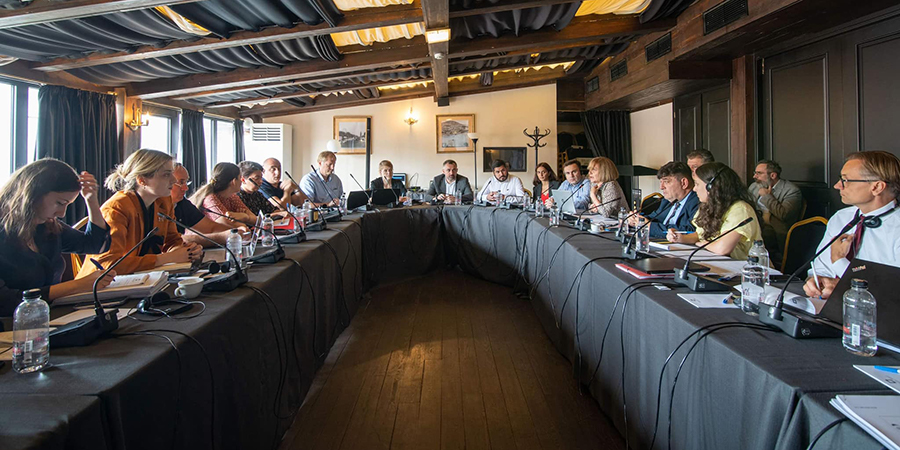
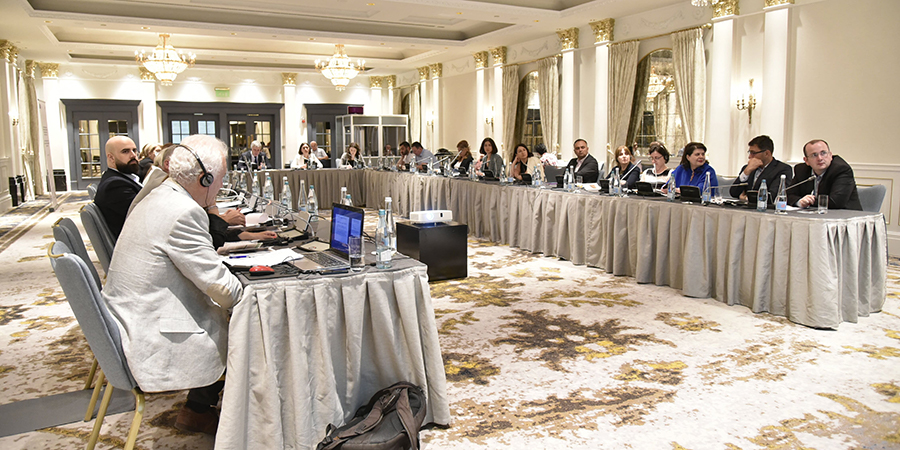
On July 17-19, as a lead co-chair of the Open Government Partnership (OGP), Georgia hosted the 5th OGP Global Summit in Tbilisi.
The event gathered high-level representatives of the public sector, civil society, private sector, parliament, academia, researchers, and journalists from OGP countries to discuss their achievements and current challenges hindering their countries’ further development.
Aiming to inspire OGP reformers to raise the level of ambition and to facilitate an open government agenda to address new challenges and improve the lives of citizens around the world, the focus of the Summit was placed on civic engagement, ways of fighting corruption, and ways to improve service delivery.
Georgia’s successful reforms and the ways in which it significantly improved its good governance and transparency practices were under the spotlight in the various panel discussions and the Summit as a whole.
The story of the country and the recent challenges Georgia has been facing was told in a recently published video prepared by US-based international development company Democracy International, courtesy of USAID funding. The video aimed to emphasize how Georgia’s membership in the OGP has helped to foster transparency and accountability in the country since joining in 2012.
Contributors to the reforms, such as former representatives of the Government of Georgia, civil society organizations, and other parties recalled the situation before Georgia decided to make these significant steps.
“2004 was the first entry point in these reforms. After the reforms it was not just fighting against corruption, but mainly the approach of the government was to simplify processes, to get rid of this so-called Soviet legacy that we had in the economy, that we had in everyday life”, recalled Aleksi Aleksishvili, Chairman and CEO at PMCG and former Minister of Finance and Minister of Economy of Georgia.
“The Government of Georgia (GoG) has already improved its budget transparency, however this has not been matched with an increase in meaningful citizen participation in the budget process. We are confident that we, non-state actors, should work together with the GoG to open participation mechanisms that involve the public in the formulation of the executive budget,” explained Mikheil Kukava, Senior Consultant at PMCG.
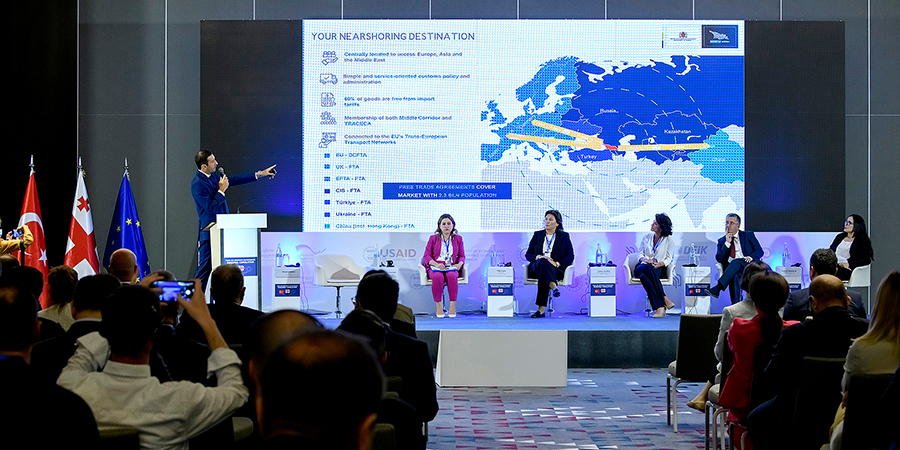
On September 9, we presented the findings of the research entitled “Investment and Export Promotion via Diagonal Cumulation between Georgia, Türkiye, and the European Union” at a forum organized by the Ministry of Economy and Sustainable Development of Georgia with the support of the USAID Economic Security Program, the EU, and GIZ.
We recently started working on a new project entitled “Communal Infrastructure for Environment and Tourism Improvement - Lot 2: Accompanying Measures,” aimed at improving the living conditions of people in four Georgian municipalities (Baghdati, Vani, Samtredia, and Kazbegi) through improving the supply of hygienically-sound drinking water and environmentally-safe sanitation infrastructure.
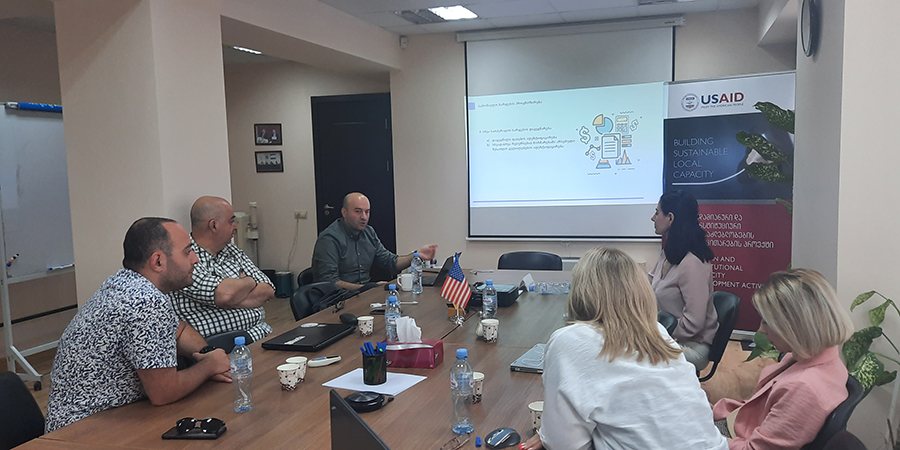
We recently completed a project entitled “Executive Roundtable (ERT) Session on Non-Profit Budgeting Process,” carried out by the USAID HICD Activity and implemented by the Kaizen, Tetra Tech company, aiming to facilitate collaboration, collective learning, and organizational development in the non-profit budgeting process with a cohort of selected organizations, including the Georgian Young Lawyers Association (GYLA), the Georgian Institute of Politics (GIP), and the Georgian Association of Social Workers (GASW).
On September 19-23, the International Consortium on Governmental Financial Management (ICGFM) is hosting the 2022 International Conference at the University Club of Washington DC, offering the first opportunity in over two years for the global PFM community to gather in-person to network and connect with leading professionals and colleagues from across the world, in a unique and distinguished setting.
On July 28, PMCG supported a workshop organized by the EU and the Ministry of Environmental Protection and Agriculture of Georgia as part of the project “Support to Environmental Protection and Fight Against Climate Change in Georgia.”
In February 2026, the number of persons receiving a salary increased by 10.6% month-over-month and by 3.6% year-over-year. In February 2026, vacancies published on Jobs.ge decreased by 0.5% month-over-month but increased by 14.2% year-over-year. From December 2025 to February 2026, the sales and procurement category contributed the most to the year-over-year increase in vacancies.
In January 2026, the number of salaried employees increased by 2.8% year-over-year and reached 904,967. In January 2026, vacancies published on jobs.ge increased by 4.6% year-over-year. Within this, sales and procurement vacancies increased by 13.4% year-over-year, while IT and programming vacancies decreased by 1.2%. In Q4 2025, compared to Q3 2025, the efficiency of the labor market slightly improved, as the seasonally adjusted job opening rate marginally rose and the unemployment rate decreased.
The Business Association of Georgia (BAG) Index is a joint product of the Business Association of Georgia, PMC Research Center, and the ifo Institute for Economic Research. The BAG Index summarizes the BAG Business Climate, BAG Employment Barometer, and BAG Investment Environment, which are calculated according to the assessments of the top managers of BAG member businesses and companies in their corporate group. BAG and PMC Research Center publish the BAG Index on a quarterly basis from Q4 2019.
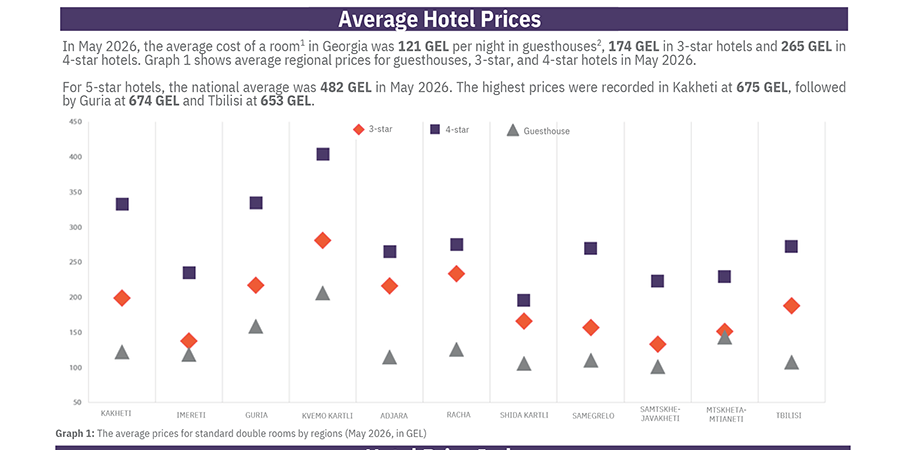
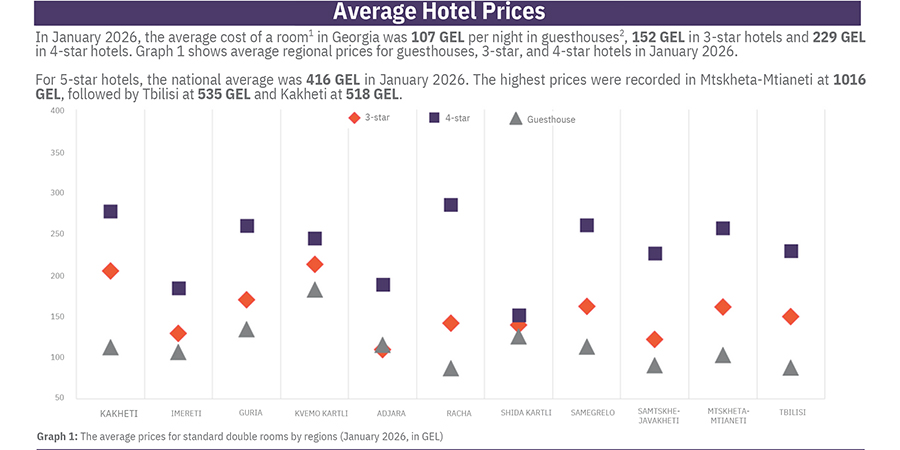
In January 2026, hotel price index in Georgia decreased by 0.8% MoM, with the largest decrease observed in Tbilisi, Samtskhe-Javakheti and Racha compared to previous month. In January 2026, hotel price index in Georgia increased by 8.9% YoY, with the largest increase in Samtskhe-Javakheti, Shida Kartli, and Adjara. The average price of a room ranged from 107 GEL to 416 GEL in January 2026.
In December 2025, the number of people receiving a monthly salary increased both month-over-month (+2.8%) and year-over-year (+4.3%). In December 2025, the total number of persons receiving a service fee increased compared to corresponding periods of 2024 (+11.3%) and 2023 (+10.0%). From October to December 2025, the finance and statistics category contributed the most to the increase in vacancies on jobs.ge compared to the same period in the previous year.
The hotel price index increased for 3-, 4-, 5-star hotels and decreased for guesthouses, both on a MoM and YoY basis. In December 2025, hotel price index in Georgia increased by 4.3% MoM, with the largest increase in Mtskheta-Mtianeti, Samtskhe-Javakheti, Tbilisi. In December 2025, hotel price index in Georgia increased by 3.9% YoY, with the largest increase in Samtskhe-Javakheti, Tbilisi, and Adjara.
In November 2025, the number of persons receiving a salary decreased by 0.8% month-over-month and by 1.0% year-over-year. In November 2025, vacancies published on Jobs.ge decreased by 14.9% month-over-month, but increased by 5.0% year-over-year due to a low base effect. From September to November 2025, the category that contributed the most to the year-over-year increase in vacancies was finance and statistics.
In November 2025, hotel price index in Georgia decreased by 5.9% month-over-month (MoM), with the largest declines in Guria, Tbilisi, and Samtskhe-Javakheti. In November 2025, hotel price index in Georgia decreased by 4.2% year-over-year (YoY), with the largest declines in Imereti, Kakheti, and Samegrelo-Zemo Svaneti. The average price of a room ranged from 101 GEL to 390 GEL in November 2025.
In October 2025, the number of persons receiving a salary increased by 1.9% month-over-month and by 2.6% year-over-year. In October 2025, vacancies published on Jobs.ge decreased month-over-month by 12.2% and by 2.1% year-over-year. The number of vacancies in IT and programming category increased the most both year-over-year (+54.8%) and month-over-month (+5.0%) in October 2025. In Q3 2025, compared to Q2 2025, labor market expanded, as seasonally adjusted job opening rate increased and unemployment rate decreased, while labor market efficiency remained unchanged.
From January to October 2025, Georgia’s economy grew by 7.6%. While YoY growth was robust, it was still below the previous year’s pace. Key growth contributors were the ICT and education sectors, accounting for 22.8% and 12.8% of growth, respectively. Services exports and other external inflows supported economic activity, with total FDI increasing by 11.0% YoY and tourism revenues rising by 5.1% YoY.