Supporting Georgia and Moldova Effectively Manage EU Integration Process
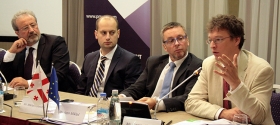

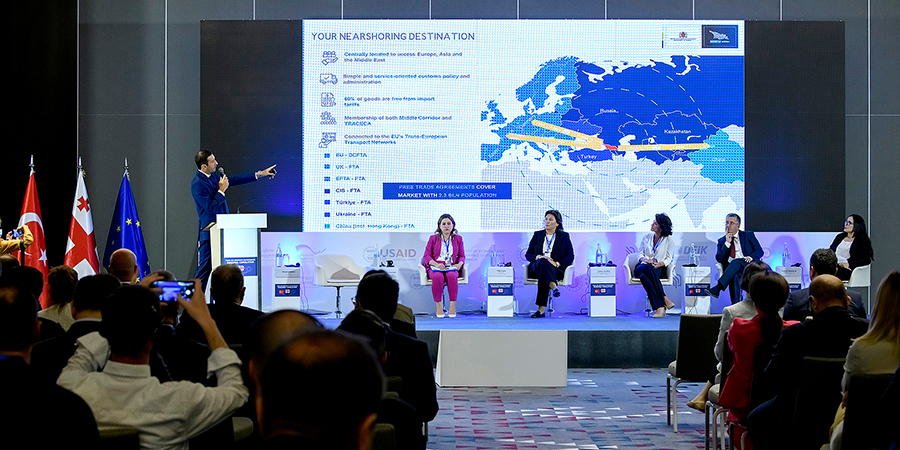
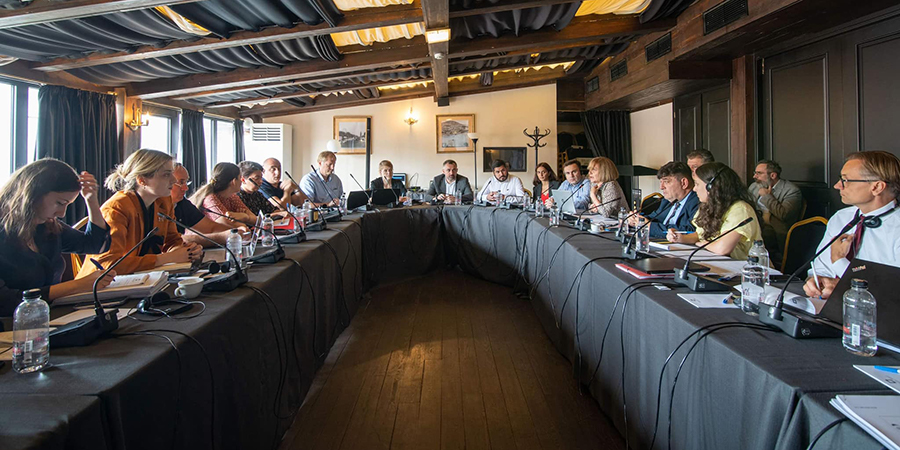
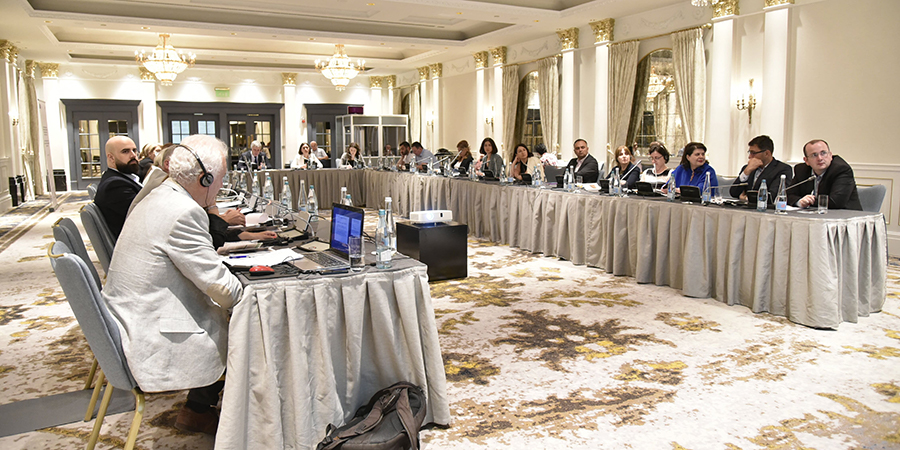
We recently hosted a high-level two-day knowledge-sharing workshop in Tbilisi with the support of the International Visegrad Fund. The aim of the event was to establish a platform for dialogue and assist Georgian and Moldovan businesses and governments to discuss the potential costs and benefits of the EU integration process. PMCG invited high-level practitioners and business sector representatives from Poland, Hungary, Slovakia and Czech Republic to hear about their experiences and perspectives in this regard. We particularly focused on the Deep and Comprehensive Free Trade Agreement - DCFTA - which represents the most challenging part of the Association Agreement for Georgia and Moldova.
The Georgian and Moldovan governments have agreed to harmonize their legislation with that of the Single European Market which requires approximation of various rules and standards. Georgia and Moldova will largely benefit from the DCFTA, although dialogue between public and private sectors is crucial to ensure the efficient and timely implementation of the agreement. SMEs represent one of the most vulnerable groups in this process as they have to adapt to a new environment and have to adopt standards in accordance with those of the EU. This will be beneficial from long-term perspective but can be costly if not carefully analyzed and considered. This challenge spawned the idea to invite recent EU members, the Visegrad countries, to our event in order to share their best practices, positive and negative negative experiences and lessons learnt.
To summarize the results of the workshop, we can say that Georgia and Moldova have to focus on three key areas in order to fully benefit from the DCFTA:
- Delays in the implementation process have to be prevented. Experience shows that some pieces of legislation are adopted in a hurried manner without proper consultation and engagement with the private sector which later causes undesired results and negative effects on businesses. Therefore, public and private sectors have to coordinate constantly to adopt legislation suitable and relevant to the current business climate.
- Strengthen knowledge and awareness of EU law approximation process. It is often considered that Georgia and/or Moldova have to copy EU member states’ legislation and completely re-write their respective national laws. This is an incorrect understanding, as in reality, the EU member states have different national legislation in each sector but it is compliant with EU general principles and directives. Therefore, there is a need to empower public and private sectors’ capacities in EU approximation processes in order to ensure legal harmonization which will prevent any misinterpretation and negatives impacts.
- Prevent overregulation. While harmonization regulations it is essential to consider local trends and the business climate. Overregulating of any sector, without proper analysis of the needs, might harm business development in the country and moreover bankrupt SMEs that play a crucial role in countries’ economic and sustainable development.
While considering Slovakia’s example we can see that recent liberal economic reforms in this country resulted in fast development and modernization of industries. For example, currently Slovakia is one of the front runners in the automotive industry. In contrast, the example of Czech Republic showed that a lack of proper public-private dialogue decreased confidence of businesses and the country could not fully embed free market principles. When it comes to Poland, it has to be mentioned that frequent law changes and excessive regulations have become the main obstacles for SMEs in its EU integration process whereas Hungary’s experience demonstrated the need to support SMEs to be competitive on a new market.
The following participants shared their views on the event and the broader issue of the path of EU integration for Georgia and Moldova.
“We are thankful to the Visegrad Group, which is the most consistent supporter of Georgia’s European integration course. We highly value their support, especially by sharing the experience in the process of modernization and Europeanization of Georgia through the Association Agreement” – David Bakradze, State Minister for European and Euro Atlantic Integration,
“From our experience we would highly encourage/recommend intensive formal and informal dialog and communication between government and public in general including dialog with representatives of employers, employees, NGOs and others” – Ivan Miklos, former Vice Prime Minister and Minister of Finance of Slovakia.
"The EU Association Agreement offers the opportunity to have a transformative impact on the Georgian economy…it is essential that the implementation of this agreement does not have the unintended effect of making it harder to do business in Georgia. Knowledge sharing with other countries provide essential insights about the problems to look out for, and how to proactively engage with the government in order to avoid them” – George Welton, President of Amcham in Georgia.
It was widely acknowledged during the workshop that Georgia is a front runner among EaP Countries when it comes to economic and business enabling reforms. PMCG is actively involved in the EU approximation agenda of EaP countries and is sharing its expertise and successful institutional reforms in the region. Follow-up events will be held in Chisinau, Moldova, on October 21-23, 2015 as well as in Minsk, Belarus on October 24-26.
The workshops are held under the International Visegrad Fund project “Sharing Experience of Public-Private Dialogue in EU Integration Process for Moldova and Georgia”, implemented by PMCG.
Follow the link below for detailed information about the project:
Sharing Experience of Public-Private Dialogue in EU Integration Process for Moldova and Georgia