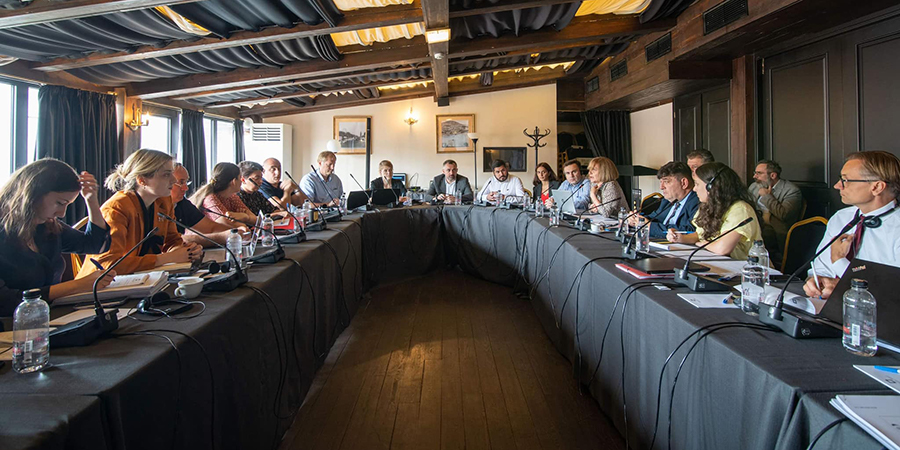
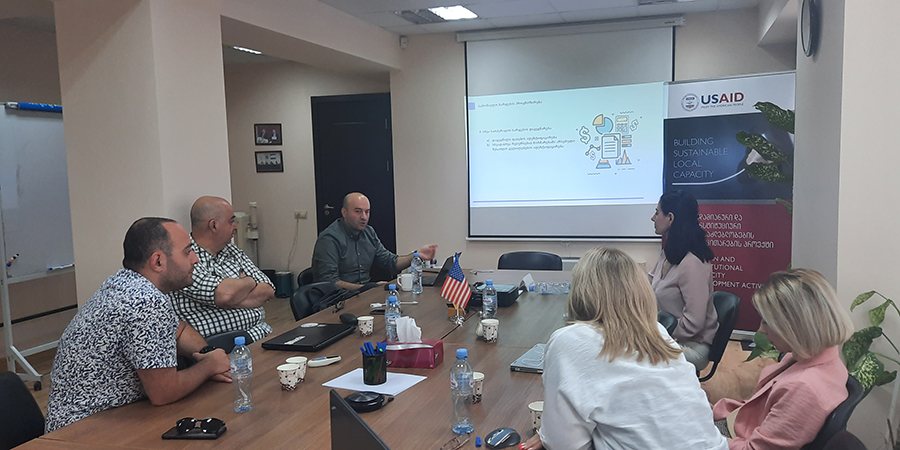
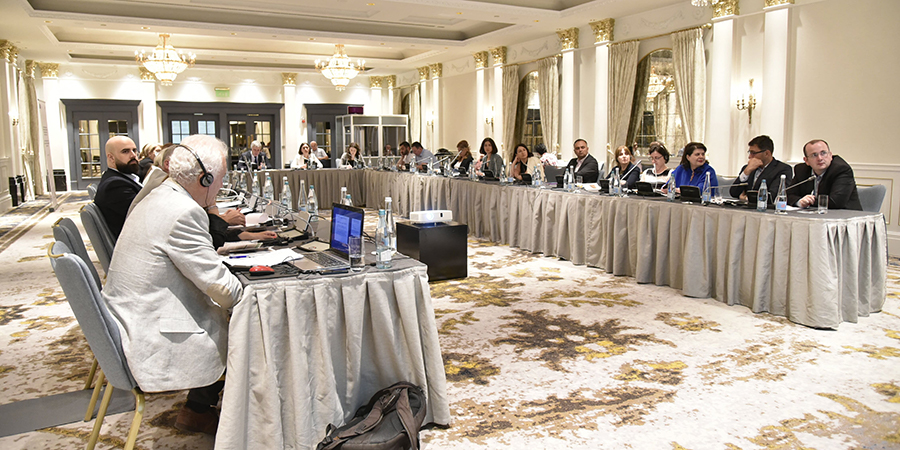
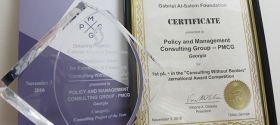
We are honored that our project supporting the Government of Adjara’s program budgeting within the USAID Good Governance in Georgia (G3) program, run by Management Systems International (MSI) has won 1st place in the Gabriel Al-Salem Foundation's International Award "Consulting Without Borders".
We would like to congratulate the project team for this acknowledgement. This again shows the value of applying international best practices to the local context.
Background and Challenges:
Traditional, input-based budgets provide limited information on the outputs and outcomes of public spending, disclosing information by line items of spending only rather than clearly showing the planned programs, activities, outputs or outcomes.
Most common practices applied in the regions of Georgia, such as the one-year plan for the budget, had weak links, if any, to government strategies and it was almost impossible for citizens to track the development of the government programs, especially multiyear activities.
Input-based budgeting has not been treated as a planning document of a given government institution but rather a finance document only dealt with by the finance departments, with minimum input from the sector policy makers. This has been resulting in weak links to sector policies and planned activities.
Methods and Activities:
We have worked with several regional governments of Georgia, such as the Government of the Autonomous Republic of Adjara, and municipalities of Batumi, Akhaltsikhe and Kutaisi to overcome challenges and to move toward more transparent and accountable systems of governance.
In most of the projects, our assistance started from the beginning – designing a high-level strategic direction document of the government. This document reflected all the priorities of the local governments and was based on the results of round-table discussions with the ministries, sub-agencies, sector specialists, CSOs, and other interested groups.
Later, the government programs were translated into program budgeting forms, creating programs, sub-programs, activities, outputs, outcomes and relevant key performance indicators. To achieve sustainability, special attention was dedicated to on-the-job trainings, coaching and workshops, covering technical and methodological aspects and the best international practices of program budgeting.
On one hand, wide coverage makes the process difficult, however, this was one of the key features in achieving success and changing the budgeting practice at each and every level of spending taxpayers’ money.
Results:
As a result of a complex approach, combining the best international practices with the local context, the interest and engagement of stakeholders increased, and citizens gained more effective and transparent governments, disclosing activities, outputs and outcomes with respective key performance indicators, enabling effective monitoring and evaluation of budget execution.
Overall, these projects achieved:
"PMCG has been a reliable and trusted partner for the five-year Good Governance Initiative (GGI) project in Georgia. PMCG staff and local consultants have provided timely and critical inputs, supporting the Government of Georgia’s governance reform process in all branches of government with high-quality analytical services, based on their excellent local knowledge and experience. We look forward to continuing our working relationship with PMCG over the remaining years of the GGI program".
David B. Smith, GGI Chief of Party, Tetra Tech ARD
"Collaboration with PMCG experts and project team, obtaining qualified recommendations and sharing their experience was very important for the professional development of employees of the Ministry of Economy and Finance. We hope to have the chance to collaborate with PMCG again."
David Baladze, the Minister of Finance and Economy of GoARA
“This project has important implications for Georgia: it should increase the level of trust of the local population in government, ensuring that decisions on policy and expenditure are clearer to the population. It will also, in the long turn, lead to a more inclusive policy process, ensuring that programmes and budget are formed on the basis that they meet with the needs or approval of wider stakeholders”.
Gabriel Al Salem Foundation Awards Committee
*
All the described projects are implemented within the framework of the USAID Good Governance Initiative (GGI) and Good Governance in Georgia (G3) programs.
Follow the links below for detailed information about specific projects:
Strengthening Government of Autonomous Republic of Adjara Institutional Capacity for Program Budgeting
Assisting Kutaisi City Municipality in Elaboration of the Economic Development Strategy
Improving program budgeting capacity of Akhaltsikhe municipality
Strengthening Program Budgeting Capacity of Batumi Municipality
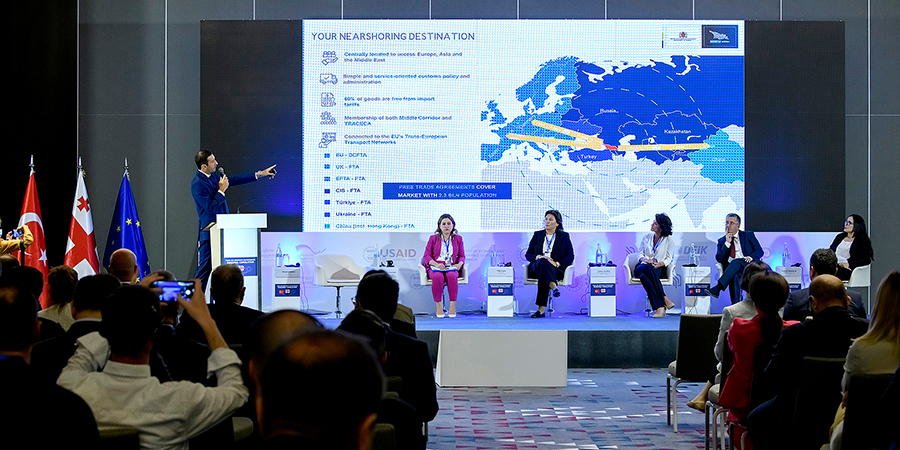
On September 9, we presented the findings of the research entitled “Investment and Export Promotion via Diagonal Cumulation between Georgia, Türkiye, and the European Union” at a forum organized by the Ministry of Economy and Sustainable Development of Georgia with the support of the USAID Economic Security Program, the EU, and GIZ.
We recently started working on a new project entitled “Communal Infrastructure for Environment and Tourism Improvement - Lot 2: Accompanying Measures,” aimed at improving the living conditions of people in four Georgian municipalities (Baghdati, Vani, Samtredia, and Kazbegi) through improving the supply of hygienically-sound drinking water and environmentally-safe sanitation infrastructure.
We recently completed a project entitled “Executive Roundtable (ERT) Session on Non-Profit Budgeting Process,” carried out by the USAID HICD Activity and implemented by the Kaizen, Tetra Tech company, aiming to facilitate collaboration, collective learning, and organizational development in the non-profit budgeting process with a cohort of selected organizations, including the Georgian Young Lawyers Association (GYLA), the Georgian Institute of Politics (GIP), and the Georgian Association of Social Workers (GASW).
On September 19-23, the International Consortium on Governmental Financial Management (ICGFM) is hosting the 2022 International Conference at the University Club of Washington DC, offering the first opportunity in over two years for the global PFM community to gather in-person to network and connect with leading professionals and colleagues from across the world, in a unique and distinguished setting.
On July 28, PMCG supported a workshop organized by the EU and the Ministry of Environmental Protection and Agriculture of Georgia as part of the project “Support to Environmental Protection and Fight Against Climate Change in Georgia.”
In February 2026, the number of persons receiving a salary increased by 10.6% month-over-month and by 3.6% year-over-year. In February 2026, vacancies published on Jobs.ge decreased by 0.5% month-over-month but increased by 14.2% year-over-year. From December 2025 to February 2026, the sales and procurement category contributed the most to the year-over-year increase in vacancies.
In January 2026, the number of salaried employees increased by 2.8% year-over-year and reached 904,967. In January 2026, vacancies published on jobs.ge increased by 4.6% year-over-year. Within this, sales and procurement vacancies increased by 13.4% year-over-year, while IT and programming vacancies decreased by 1.2%. In Q4 2025, compared to Q3 2025, the efficiency of the labor market slightly improved, as the seasonally adjusted job opening rate marginally rose and the unemployment rate decreased.
The Business Association of Georgia (BAG) Index is a joint product of the Business Association of Georgia, PMC Research Center, and the ifo Institute for Economic Research. The BAG Index summarizes the BAG Business Climate, BAG Employment Barometer, and BAG Investment Environment, which are calculated according to the assessments of the top managers of BAG member businesses and companies in their corporate group. BAG and PMC Research Center publish the BAG Index on a quarterly basis from Q4 2019.
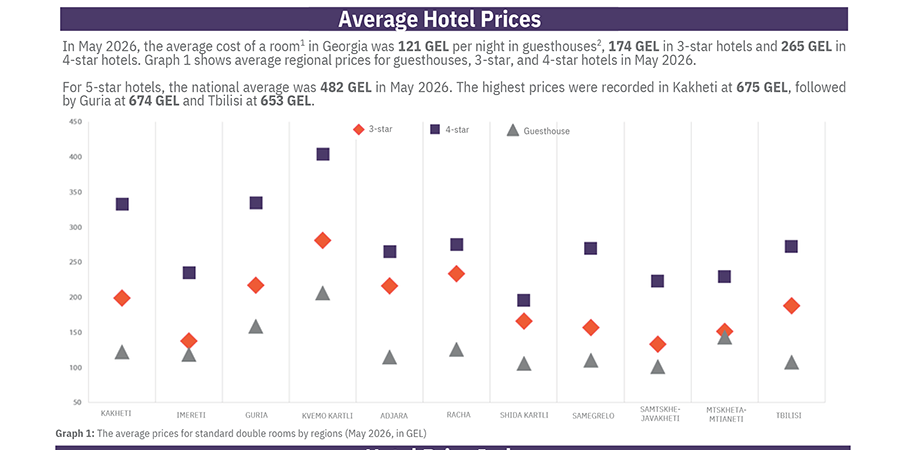
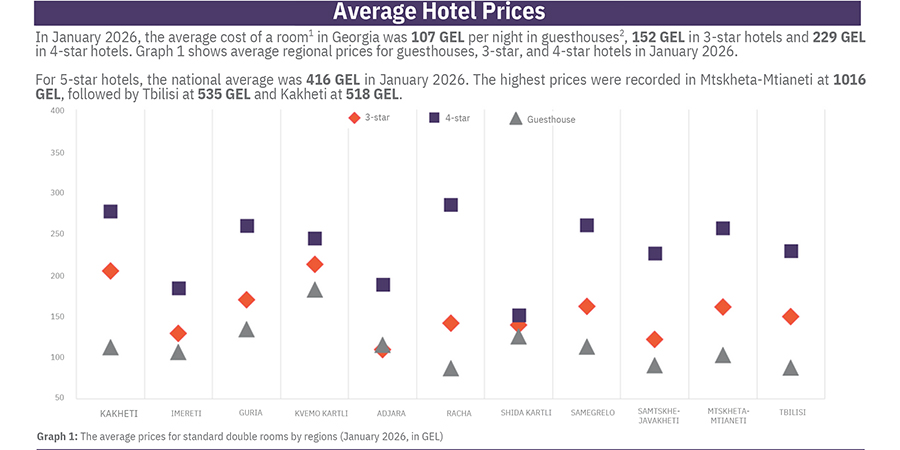
In January 2026, hotel price index in Georgia decreased by 0.8% MoM, with the largest decrease observed in Tbilisi, Samtskhe-Javakheti and Racha compared to previous month. In January 2026, hotel price index in Georgia increased by 8.9% YoY, with the largest increase in Samtskhe-Javakheti, Shida Kartli, and Adjara. The average price of a room ranged from 107 GEL to 416 GEL in January 2026.
In December 2025, the number of people receiving a monthly salary increased both month-over-month (+2.8%) and year-over-year (+4.3%). In December 2025, the total number of persons receiving a service fee increased compared to corresponding periods of 2024 (+11.3%) and 2023 (+10.0%). From October to December 2025, the finance and statistics category contributed the most to the increase in vacancies on jobs.ge compared to the same period in the previous year.
The hotel price index increased for 3-, 4-, 5-star hotels and decreased for guesthouses, both on a MoM and YoY basis. In December 2025, hotel price index in Georgia increased by 4.3% MoM, with the largest increase in Mtskheta-Mtianeti, Samtskhe-Javakheti, Tbilisi. In December 2025, hotel price index in Georgia increased by 3.9% YoY, with the largest increase in Samtskhe-Javakheti, Tbilisi, and Adjara.
In November 2025, the number of persons receiving a salary decreased by 0.8% month-over-month and by 1.0% year-over-year. In November 2025, vacancies published on Jobs.ge decreased by 14.9% month-over-month, but increased by 5.0% year-over-year due to a low base effect. From September to November 2025, the category that contributed the most to the year-over-year increase in vacancies was finance and statistics.
In November 2025, hotel price index in Georgia decreased by 5.9% month-over-month (MoM), with the largest declines in Guria, Tbilisi, and Samtskhe-Javakheti. In November 2025, hotel price index in Georgia decreased by 4.2% year-over-year (YoY), with the largest declines in Imereti, Kakheti, and Samegrelo-Zemo Svaneti. The average price of a room ranged from 101 GEL to 390 GEL in November 2025.
In October 2025, the number of persons receiving a salary increased by 1.9% month-over-month and by 2.6% year-over-year. In October 2025, vacancies published on Jobs.ge decreased month-over-month by 12.2% and by 2.1% year-over-year. The number of vacancies in IT and programming category increased the most both year-over-year (+54.8%) and month-over-month (+5.0%) in October 2025. In Q3 2025, compared to Q2 2025, labor market expanded, as seasonally adjusted job opening rate increased and unemployment rate decreased, while labor market efficiency remained unchanged.
From January to October 2025, Georgia’s economy grew by 7.6%. While YoY growth was robust, it was still below the previous year’s pace. Key growth contributors were the ICT and education sectors, accounting for 22.8% and 12.8% of growth, respectively. Services exports and other external inflows supported economic activity, with total FDI increasing by 11.0% YoY and tourism revenues rising by 5.1% YoY.