Project Description:
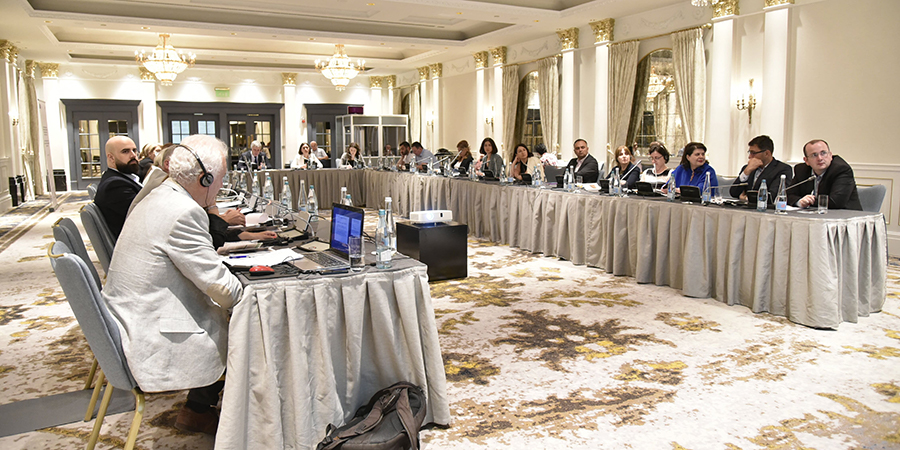
PMCG, as part of a consortium led by Tetra Tech ARD, is providing support to the Georgian Parliament’s Healthcare and Social Issues Committee to develop a policy on Continuous Education for Doctors. The assistance is designed to develop a comprehensive policy to address the issue of doctors’ continuing education, which remains a serious challenge in the healthcare sector. The activity was initiated by the Committee in June 2015. In order to test the suitability of the initiative, on 7 July 2015, the Committee organized a meeting with leading experts in the medical education sector. The experts’ panel agreed that doctors’ continuing education is the most pressing issue at the present time. As a result, the Committee wishes to put in place a comprehensive reform process championed by Dimitri Khundadze, the Committee Chair and Giorgi Khechinashvili, member of the Committee. The leadership of the Committee sees this as a three stage process: 1) First stage – needs assessment stage; 2) Second stage - policy development stage; 3) Third stage - policy communication stage.
During the consultancy, consultants from PMCG perform the following tasks:
1. Conduct a thorough needs assessment (including analysis of relevant legislation and practices) and SWOT analysis in the area of medical education and, specifically, doctors’ continuing education, in order to identify:
- Who the stakeholders are
- What works
- What does not work
- What has been done in this area before
- Whether there are any past reports and studies that can be used today
2. Based on the needs assessment results, formulate policy options applicable to the Georgian context
3. Draft a policy paper and present it at an inter-agency/stakeholder meeting for initial feedback and scrutiny
4. Draft a policy outreach plan targeting the following audiences:
- Government (national and local)
- Medical doctors
- Medical students
- General public
5. Based on the feedback, finalize the policy paper and outreach plan
6. Work with the Committee to present the finalized policy paper and the outreach plan at a conference attended by all major stakeholders, including the relevant ministries, the Prime Minister’s Office and civil society groups.
Background information:
USAID has awarded Tetra Tech ARD with a 5-year contract under the Office of Democracy and Governance, whose purpose is to support the Government of Georgia in strengthening overall transparency, accountability and effectiveness of selected governance and service delivery systems. GGI’s work targets the legislative and executive branches at both the central and local government levels. To ensure greater government accountability, GGI works with government and civil society representatives to enhance public participation and disseminate public information about key reforms. This activity addresses the Governing Justly and Democratically Objective of U.S. Government Foreign Assistance, and especially the promotion of well-governed states and civil society areas.
The objectives of GGI are to improve administrative and financial management of public institutions at all levels, to increase civic engagement and improved access to independent, reliable and balanced information relevant to Georgia’s good governance, to strengthen policy development and lawmaking processes and to strengthen institutional oversight of government.
Follow the links below for more detailed information:
Good Governance Initiative (GGI)
Development of a National Health Promotion Strategy and a Prioritized National Health Promotion Action Plan
Support for Preparation of General Methodology for Municipal Priority Document, Design Municipal Priority Documents for 22 Municipalities and Update Comprehensive Regional Action Plans for 6 Regions of Georgia
Regional Development Strategy Context Analysis of the Autonomous Republic of Adjara
Increasing Program Budgeting Capacity of Ministry of Labor Social and Health Affiairs of Georgia
Increasing Program Budgeting Capacity of the Ministry of Regional Development and Infrastructure of Georgia
Support to Public Finance Policy Reform (PFM)