The goal of this project is to evaluate US Embassy’s Public Affairs Foreign Assistance Programs in Georgia, namely the English Access Micro-Scholarship Program (ACCESS) and the Technical and Vocational Education and Training Support Program (TVET). By employing a mixed-method evaluation (comprising both quantitative and qualitative data), we aim to arrive at a better understanding of:
To evaluate the ACCESS Program, we will use a modified Kirkpatrick model, which is an internationally-recognized framework for assessing training programs. Having tailored the model in accordance with the project’s goals, we will investigate the following seven aspects of the ACCESS Program: Context & Needs; Participant Selection; Training Inputs and Process; Participant’s Reaction; Participant’s Learning; Participant’s Practice; and Training Program Impact. With these goals in mind, the evaluation team will conduct a desk review, as well as baseline, endline, and 6-month follow-up surveys with beneficiaries, and in-depth interviews with the relevant stakeholders. In addition, we will organize a ripple effects mapping workshop – a qualitative method that will help us to capture the wider impacts and adaptability of the program, beyond its intended outcomes. Moreover, we will conduct an online sense-making workshop with the participation of stakeholders at the end of the evaluation to discuss and agree on the findings,, before reaching a consensus on recommendations, all of which will be incorporated into the final evaluation report.
As for the evaluation of the TVET Program, we will examine not only the performance of the two projects implemented under this Program but also the broader TVET system and its elements to better understand the performance of these two projects. Guided by these goals, the evaluation team will carry out the following activities: desk review; in-depth interviews with program stakeholders; and survey with beneficiaries and their parents. Furthermore, similar to the previous evaluation, this will also entail conducting a sense-making workshop with program stakeholders.
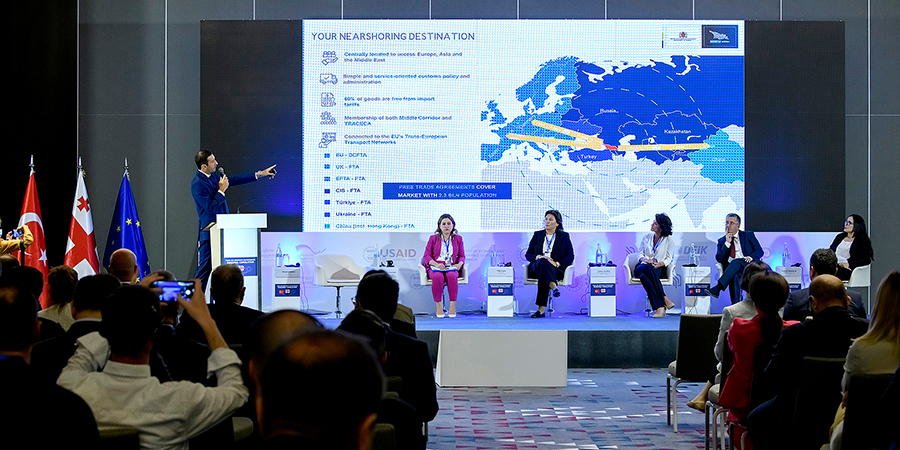
On September 9, we presented the findings of the research entitled “Investment and Export Promotion via Diagonal Cumulation between Georgia, Türkiye, and the European Union” at a forum organized by the Ministry of Economy and Sustainable Development of Georgia with the support of the USAID Economic Security Program, the EU, and GIZ.
We recently started working on a new project entitled “Communal Infrastructure for Environment and Tourism Improvement - Lot 2: Accompanying Measures,” aimed at improving the living conditions of people in four Georgian municipalities (Baghdati, Vani, Samtredia, and Kazbegi) through improving the supply of hygienically-sound drinking water and environmentally-safe sanitation infrastructure.
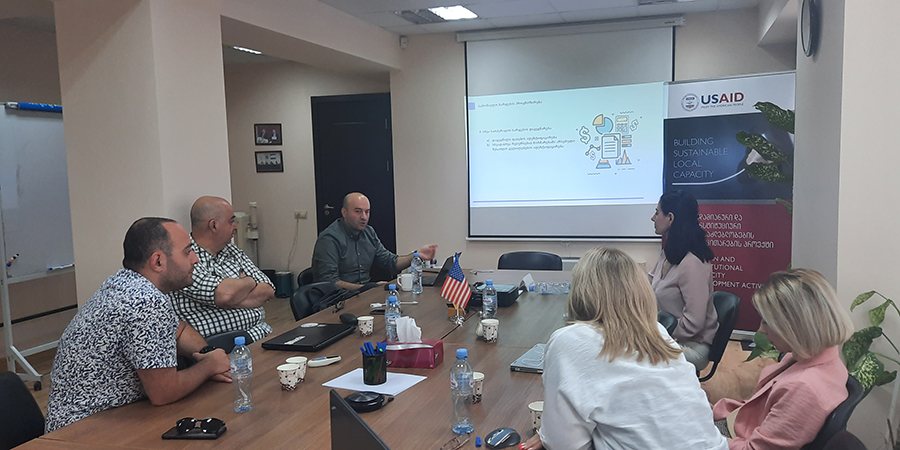
We recently completed a project entitled “Executive Roundtable (ERT) Session on Non-Profit Budgeting Process,” carried out by the USAID HICD Activity and implemented by the Kaizen, Tetra Tech company, aiming to facilitate collaboration, collective learning, and organizational development in the non-profit budgeting process with a cohort of selected organizations, including the Georgian Young Lawyers Association (GYLA), the Georgian Institute of Politics (GIP), and the Georgian Association of Social Workers (GASW).
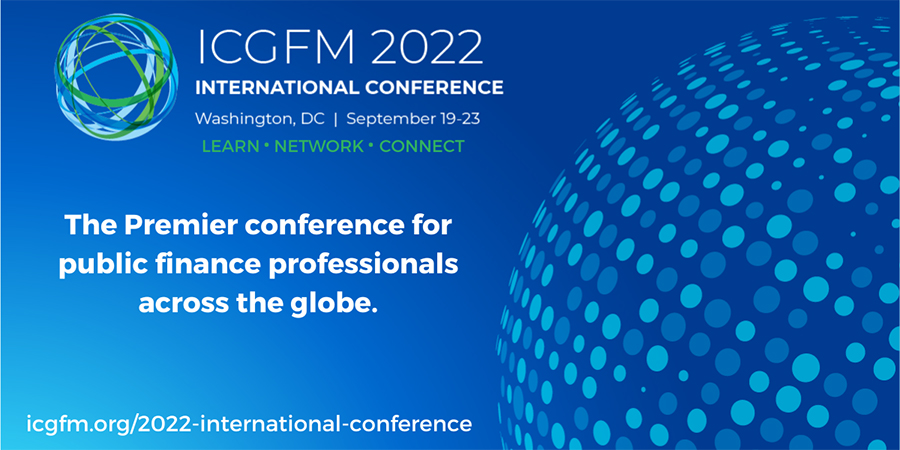
On September 19-23, the International Consortium on Governmental Financial Management (ICGFM) is hosting the 2022 International Conference at the University Club of Washington DC, offering the first opportunity in over two years for the global PFM community to gather in-person to network and connect with leading professionals and colleagues from across the world, in a unique and distinguished setting.
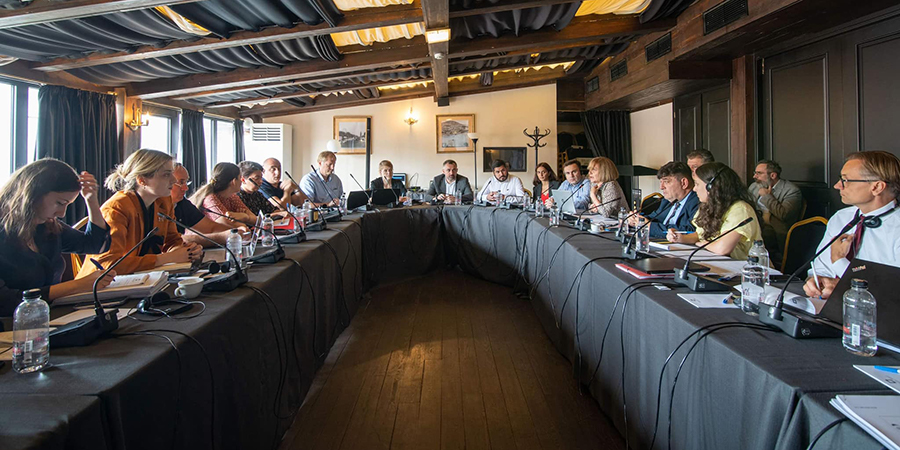
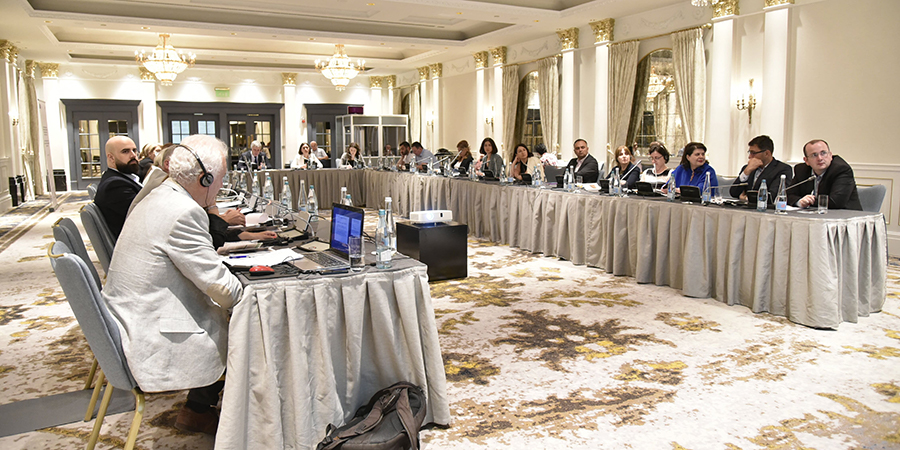
On July 28, PMCG supported a workshop organized by the EU and the Ministry of Environmental Protection and Agriculture of Georgia as part of the project “Support to Environmental Protection and Fight Against Climate Change in Georgia.”
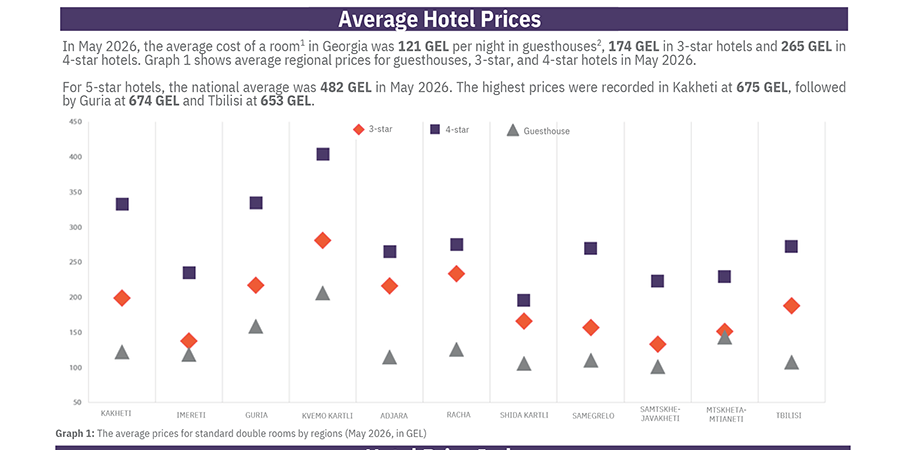
In November 2025, hotel price index in Georgia decreased by 5.9% month-over-month (MoM), with the largest declines in Guria, Tbilisi, and Samtskhe-Javakheti. In November 2025, hotel price index in Georgia decreased by 4.2% year-over-year (YoY), with the largest declines in Imereti, Kakheti, and Samegrelo-Zemo Svaneti. The average price of a room ranged from 101 GEL to 390 GEL in November 2025.
In October 2025, the number of persons receiving a salary increased by 1.9% month-over-month and by 2.6% year-over-year. In October 2025, vacancies published on Jobs.ge decreased month-over-month by 12.2% and by 2.1% year-over-year. The number of vacancies in IT and programming category increased the most both year-over-year (+54.8%) and month-over-month (+5.0%) in October 2025. In Q3 2025, compared to Q2 2025, labor market expanded, as seasonally adjusted job opening rate increased and unemployment rate decreased, while labor market efficiency remained unchanged.
In October 2025, hotel price index in Georgia decreased by 9.6% month-over-month (MoM), with the largest declines in Adjara,Guria, and Kakheti. In October 2025, hotel price index in Georgia decreased by 2.3% year-over-year(YoY), with the largest declines in Mtskheta-Mtianeti, Samegrelo-ZemoSvaneti, and Kakheti. The average price of a room ranged from 100 GEL to 442 GEL in October 2025.
In September 2025, the number of people receiving a monthly salary increasedby 4.9%month-over-month and by 2.6% year-over-year. The total number of vacancies published on Jobs.ge increased month-over-month (+20.0%) and year-over-year (+4.7%). Over the past three months, the number of vacancies on Jobs.gein logistics declined by 4.5%, while those in management fell by 4.4% compared to the same period in 2024.
The Business Association of Georgia (BAG) Index is a joint product of the Business Association of Georgia, PMC Research Center, and the ifo Institute for Economic Research. The BAG Index summarizes the BAG Business Climate, BAG Employment Barometer, and BAG Investment Environment, which are calculated according to the assessments of the top managers of BAG member businesses and companies in their corporate group. BAG and PMC Research Center publish the BAG Index on a quarterly basis from Q4 2019.