Project Description:
PMC Research is implementing the project entitled Sharing Experience of Public-Private Dialogue in EU Integration Process for Moldova and Georgia, which aims to assist Georgian and Moldovan businesses and governments to have a better understanding of the potential costs and benefits of the implementation of the DCFTA and of the need for effective coordination mechanisms in order to ensure the timely completion of the EU approximation process. The project envisages sharing the experience of Visegrad countries in developing a constructive public and private sector dialogue while harmonizing legislation and standards with those of the EU.
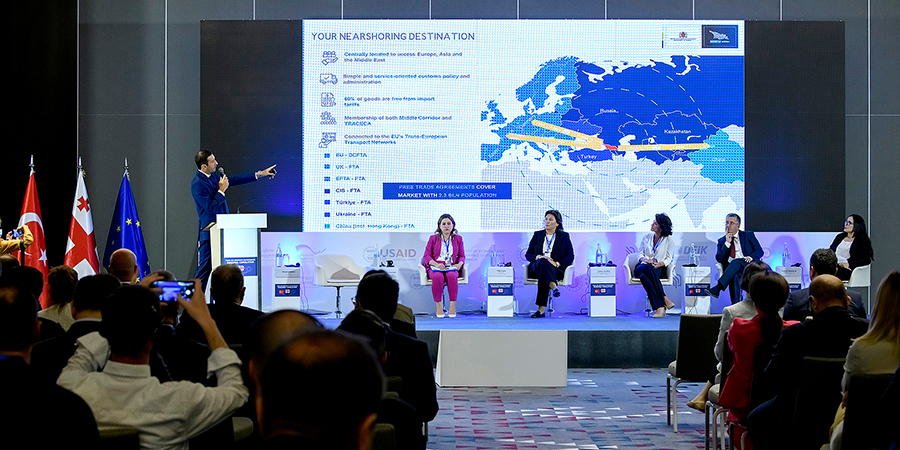
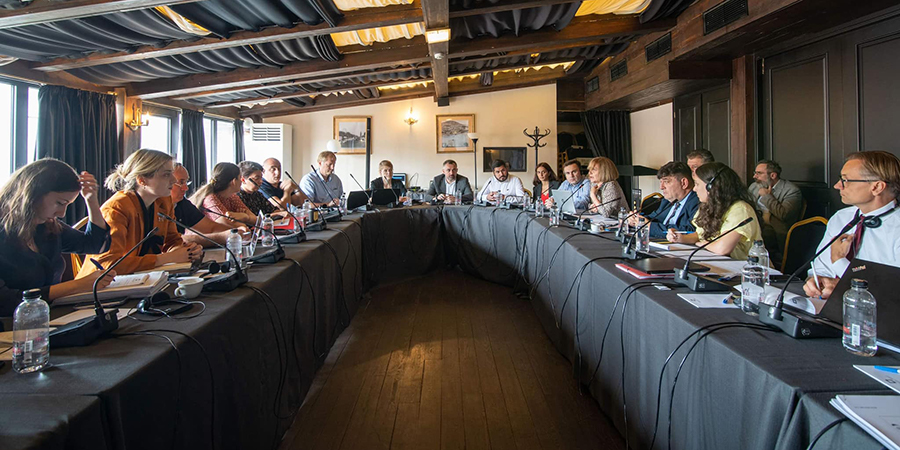
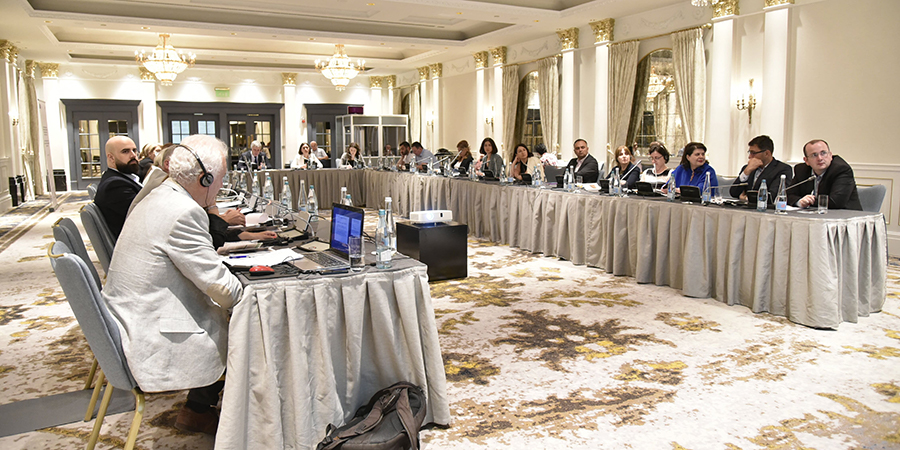
The project consists of two major workshops in Tbilisi and Chisinau which will gather relevant stakeholders and business associations to discuss related developments, challenges and to agree on the measures to be taken in the upcoming period in order to fully benefit from the opportunities the DCFTA offers to these countries. Both workshops are aimed at the creation of an established and sustainable network among representatives of business associations in Georgia, Moldova and Visegrad countries to deepen cooperation.
The project will be beneficial for a given EaP country and the region. It will facilitate the exchange of lessons learned by businesses and public authorities in the Visegrad countries during the accession/integration processes. Moreover, businesses will be better informed as to how to survive the transition process and how to increase their competitiveness. Furthermore, Georgian and Moldovan businesses will have access to developed networks with counterpart structures in the Visegrad countries that will help to realize significant outcomes in the future.
The project targets a broad range of groups:
- Business Associations in Georgia, Moldova, Poland, Slovakia, Czech Republic and Hungary
- Entrepreneurship Development Agency of Georgia
- Trade Unions (food producers, industry representatives mainly from Georgia and Moldova but also from Poland, Poland, Slovakia, Czech Republic and Hungary)
- EU-Georgia Business Council
- Chamber of Commerce and Industry of Georgia and Moldova
- International Chamber of Commerce in Georgia and Moldova
- Ministry of Economy and Sustainable Development of Georgia and Ministry of Economy of Moldova
- Ministry of Foreign Affairs and European Integration of Moldova
- Office of the State Minister of Georgia in European and Euro-Atlantic Integration
PMC Research will provide services for the following activities:
- 3-day workshop in Tbilisi
- PMC RC will be responsible for identification of participants who will be: key Georgian stakeholders (up to 15 representatives), 6 experts/practitioners from Visegrad countries (PO, CZ, SLO, HU) and 5 representatives of Moldovan stakeholders
- 3-day workshop in Chisinau
- PMCG, together with partners, will be responsible for identification of participants who will be: key Moldovan stakeholders (up to 15 representatives), 6 experts/practitioners from Visegrad countries (PO, CZ, SLO, HU) and 5 representatives of Georgian stakeholders
- In order to share information, raise awareness and make this process more productive, PMCG will create a project webpage and distribute information about the project and its results
Background information:
Georgia and Moldova have recently signed and ratified Association Agreements with the EU, including Deep and Comprehensive Free Trade Agreements (DCFTA). The signing of the Agreements will have substantial implications for Georgian and Moldovan businesses:
- The Georgian and Moldovan governments have agreed to harmonize their legislation with that of the Single European Market, notably with respect to standards, metrology, accreditation, competition, market surveillance, food safety, and intellectual property, and to reduce technical and administrative barriers to entry into the domestic markets. The adoption and enforcement of harmonized legislation will impact upon the cost of doing business for Georgian and Moldovan businesses, and the removal of technical and administrative barriers will expose them to greater competition in their domestic markets from EU-based companies. It is imperative that the business associations in Georgia and Moldova are able to communicate with their respective governments and enable efficient and effective participation in the legal drafting processes in order to ensure that their members’ interests are protected.
- Conversely, the signature of the Agreements offers substantial opportunities for Georgian and Moldovan businesses to enter the Single European Market. However, in order to maximize the benefits deriving from the Association Agreement, Georgian and Moldovan businesses will in all probability need to develop partnerships with EU companies, participate in their marketing and distribution chains, and learn from their knowledge of the markets.
At present, the business communities in both Georgia and Moldova are ill-equipped to meet these challenges. Local business associations have limited impact on the policy-making and legal-drafting processes, their lobbying capacity is also very low, and the coordination between the associations and the government is limited. The structures and processes of social dialogue are still embryonic. Moreover, Georgian and Moldovan businesses have little experience of entering and exploiting European markets: the previous trade agreements were quota-based, and few companies could match the required levels of quality and safety.
The Visegrad countries have highly relevant experience when it comes to coordination between business and government during the Association/Accession process, and have successfully integrated into the Single European Market. The planned workshops in Tbilisi and Chisinau which will bring together representatives of Chambers of Commerce and Industry, social partner organizations and relevant practitioners from the Visegrad countries and their counterparts in Georgia and Moldova.
Follow the links below for more detailed information:
Sharing Georgia’s Experience of Successful Reforms with Belarus
Sharing Experience of Georgian Reforms and Visegrad Countries' EU Economic Integration for Albania and Kosovo
Support to Approximation of Georgian VAT Rules with EU VAT Legislation