Project Description:
The objective of the project is to support the Parliament of Georgia as a credible institution with an essential greater role in national policy-making and European integration in the framework of the newly enforced constitutional system.
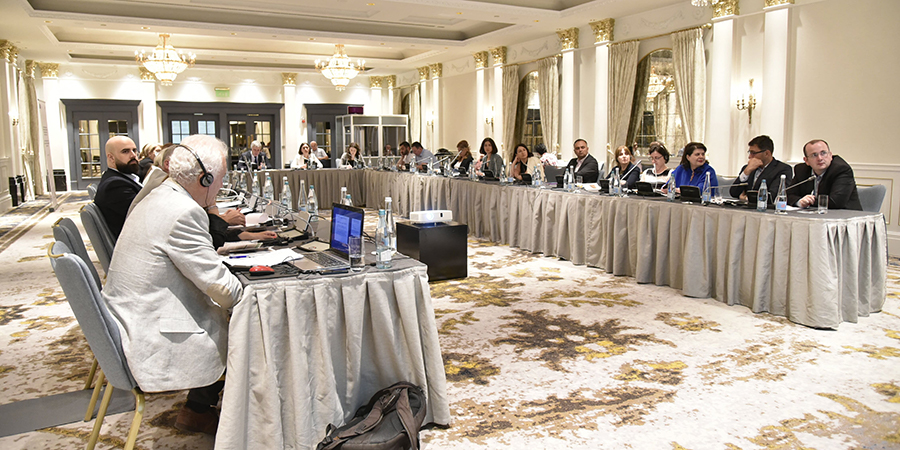
Due to its sound experience in highly valuable institutional building, United Nations Development Programme (UNDP) contracted PMC Research Center (PMC RC), an independent non-governmental think tank under the auspices of Policy and Management Consulting Group, for a five-year project. PMC RC, in close collaboration with the Parliament of Georgia will develop a comprehensive Institutional Reform Plan (IRP) for the mid-term period.
The IRP will define a detailed road map for the parliament’s leadership and staff to implement sustainable institutional reforms, estimate required resources and define a scheme of monitoring and evaluation of progress made.
To ensure the effectiveness of the Parliament of Georgia as an institution, PMC RC will operate the following activities:
1. Support to the Parliament to develop a comprehensive and overarching Institutional Reform Plan (IRP) for the mid-term period in a participatory and inclusive manner:
- Develop a clear and focused IRP
- Motivate and engage the Parliament’s leadership, mid-level managers and staff to achieve measurable results
- Clarify Parliament’s vision, medium-term objectives and measurable outcomes expected through implementation of the IRP
- Complete a thorough analysis of external or internal factors of significance to the achievement of results anticipated through implementation of IRP implementation plan
- Build a feasible, time-bound implementation road map detailing activities, timelines, and required resources to link the Institutional Reform Plan to the Parliament’s’ day-to-day activities
- Integrate the IRP priorities, objectives and results into the Parliament’s annual budget and respective operational plan
- Develop performance measurement instrument enabling the Parliament to track, monitor and evaluate the progress attained in the implementation of IRP
- Design a functional, sustainable mechanism of coordination, networking or information sharing with donors and external stakeholders to ensure that donor assistance is provided in line with the IRP priorities
2. Support the Parliament in developing its program-based budget:
- Assess of program budgeting practices of Parliament of Georgia
- Develop Parliament’s program budgeting manual
- Train the Parliament’s Financial Department and relevant stakeholders
- Conduct on-the-job consultancy for the Financial Department
3. Support the Parliament in introducing an effective donor coordination mechanisms:
- Develop Terms of Reference (ToR) for donor coordination mechanism
- Conduct donor coordination event
Background Information:
UNDP works in more than 170 countries and territories, giving a global perspective and local insights to help empower lives and build resilient nations. UNDP works on many critical development issues, from combating and adapting to climate change to stopping HIV/AIDS, protecting the environment and promoting good, inclusive governance.
The UNDP project “Strengthening the System of Parliamentary Democracy in Georgia”, a five-year project divided into two 2.5-year phases is being implemented by UNDP with the financial support of the EU Delegation. The first phase of the project (February 2014-August 2016) is designed around three main activities aimed at supporting the Parliament in: (a) improving its institutional effectiveness; (b) strengthening the Parliament’s policy-making and oversight capacities; and (c) enhancing the Parliament’s role in the European integration process.